


The Psychology Behind Winning Poker Players
Poker has a dirty secret that the strategy books mention only in passing: technical knowledge is the entry fee, not the edge. Rooms everywhere are full of players who know the right ranges, understand pot odds, and can recite continuation-bet theory, yet lose year after year. Their leak isn’t in their strategy documents. It’s in the six inches between their ears, in the moments after an ace hits the river and everything they know goes quiet.
Winning players are not calmer by birth. They’ve built specific psychological skills: the ability to notice their own emotional weather, to keep decisions separate from results, and to hold confidence without letting ego drive. This article maps that inner game: what tilt actually is, why variance breaks unprepared minds, and the trainable habits that hold a player’s skill together under pressure.
Why the Mental Game Decides Long-Term Results
Picture two players with identical technical ability playing the same stakes for a year. Player A performs at 100 percent of their skill regardless of the last hand’s outcome. Player B plays perfectly while winning but loses ten percent of their judgement when frustrated, which is often, because poker is frustrating. Over the year, Player A wins meaningfully; Player B hovers around break-even, blames luck, and buys more strategy books, when the entire difference was psychological stability.
This is why professionals talk about the mental game with the seriousness of an athlete discussing fitness. Your technical skill sets your ceiling; your psychology determines what percentage of that ceiling you actually deliver at the table. A modest strategy executed consistently beats a brilliant strategy executed moodily, over any meaningful sample.
Tilt: The Tax on Unmanaged Emotion
Tilt is emotionally compromised decision-making, and it’s more varied than the stereotype of the raging maniac. The classic form, anger tilt after a bad beat, is only the loudest member of the family:
- Revenge tilt: targeting the specific player who cracked your aces, playing pots against them your strategy would never approve.
- Entitlement tilt: “I’ve been card-dead for two hours, I deserve to win this one,” followed by an indefensible call.
- Desperation tilt: playing faster and looser near the end of a losing session to “get even before I leave,” the single most expensive hour in amateur poker.
- Winner’s tilt: the overlooked one. Up three buy-ins, feeling invincible, opening every hand because tonight is your night. The pile shrinks as fast as it grew.
What unites them is a shift in the decision-maker: from the deliberate, calculating mind to the emotional one, while the player believes they’re still playing their game. That belief is tilt’s best camouflage.
The counter-skill is not suppressing emotion, which fails, but noticing it early. Winning players develop an internal alarm for their personal tilt signature: the warmth in the chest, the urge to act faster, the inner monologue turning to fairness rather than ranges. Noticing creates a gap between feeling and action, and in that gap lives every good decision made on a bad night. The practical tools are unglamorous: a breath and a deliberate three-second pause before acting, sitting out an orbit after a big loss, and hard rules like stop-losses, which we cover in our guide to bankroll management, so that your worst moments are governed by rules your best moments wrote.
Variance and the Psychology of Bad Beats
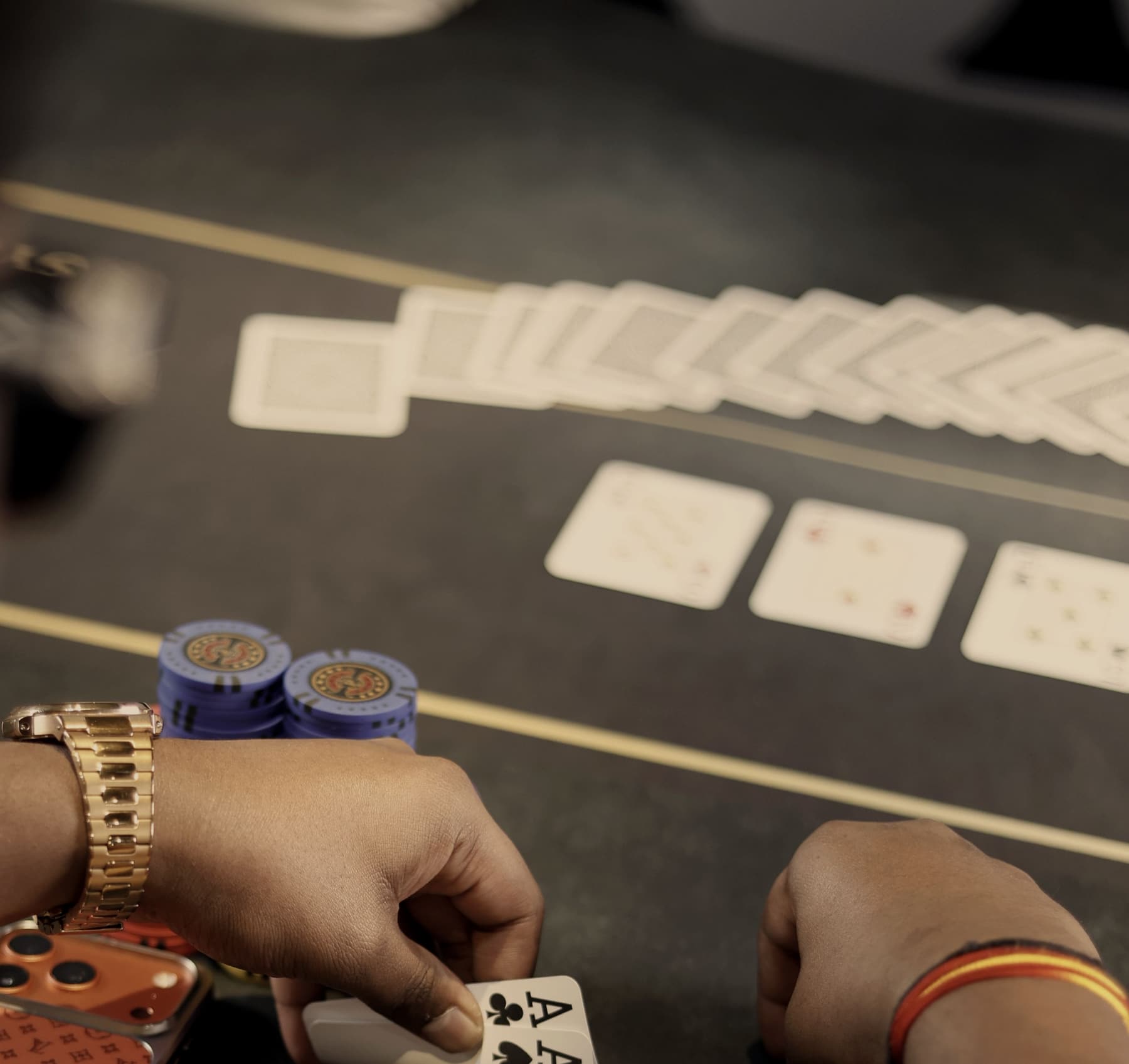
Here is the mathematical truth that separates the durable from the fragile: bad beats are not aberrations; they are the schedule operating normally. Get your money in with A♠ A♥ against K♦ K♣ and you’ll lose almost one time in five. That’s not injustice. That’s the price of a game where the worst hand always has hope, and it’s precisely why weaker players keep paying into games with stronger ones.
Winning players internalise a reframe that sounds simple and takes years: you are paid for decisions, not outcomes. When the money went in as an 82 percent favourite, you did your job; the river card was never in your job description. Players who grasp this recover from beats in minutes. Players who don’t carry each injustice like a case file, and the accumulated weight bends every subsequent decision.
There’s a liberating corollary: if results in any single session are mostly noise, then tonight’s loss says almost nothing about you. The sample that judges you is months long. Adopting that timescale emotionally, not just intellectually, is possibly the single largest psychological upgrade available to a developing player.
Results-Oriented Thinking: The Subtlest Leak
The inverse error deserves its own section because it wears the costume of learning. Results-oriented thinking judges decisions by their outcomes: “I called with bottom pair, hit two pair, and won, so it was a good call.” Or: “I folded correctly, the bluff got shown, so folding was wrong.”
Poker’s feedback is systematically misleading in the short term; good decisions routinely produce bad outcomes and vice versa. Players who learn from single results are training on corrupted data, reinforcing lucky mistakes and abandoning correct plays that happened to lose. Over time they become confidently, experiencedly wrong.
The repair is a discipline of review: evaluate decisions against the information available at the time, ideally away from the table and out loud with other players. This is where a genuine poker community pays dividends that no software can, and it’s one of the quiet advantages of playing somewhere with a culture of post-session discussion. At Poker Syndicate, the conversation after the game, hands debated over a drink, reasoning defended and dismantled, is where members do some of their most valuable improving.
Discipline and Patience: The Quiet Superpowers
Strip the mystique away and winning poker is mostly the repeated performance of two boring virtues.
Patience is folding the seventieth consecutive junk hand with the same equanimity as the first, without inventing action to relieve the boredom. Live poker’s pace makes this a real test: at 25 hands per hour, a card-dead stretch can last an evening. The players who pass the test are the ones who’ve made peace with the truth that most of poker is waiting, and that the waiting is part of the game rather than an interruption of it.
Discipline is following your own rules when every feeling argues otherwise: the stop-loss honoured mid-frustration, the marginal hand folded despite curiosity, the stake dropped when the bankroll says so. Discipline is unglamorous precisely because its victories are invisible; nobody sees the disaster that didn’t happen.
Both faculties strengthen with practice, and this is one of poker’s underrated gifts: the table is a gymnasium for them. We explore that transfer fully in our article on how poker builds real-life skills.
Confidence Without Ego
The winning temperament threads a needle. Too little confidence and you play scared: missing thin value, folding to aggression, telegraphing weakness that observant opponents devour. Too much ego and you refuse to fold big hands, take personal offence at bluffs, and stay in games that outclass you rather than admit the truth.
The distinction: confidence is trust in your process; ego is attachment to your image. Confidence survives losing sessions intact, because the process was sound. Ego can’t survive even a winning session gracefully. The practical tells of ego at your own table are worth memorising: refusing to move down in stakes, needing to win the exchange after table banter, calling a suspected bluff “to make a point.” Every one of those has a price tag.
The strongest players hold their self-assessment lightly: certain enough to bet decisively, humble enough to fold, curious enough to still be learning. It’s a psychological posture that, once built, tends to leak into the rest of life, usually improving it.
Reading Opponents’ Psychology
The mental game has an outward-facing side. Every principle above is also a lens on your opponents, because most of them haven’t done this work.
The observations that pay: Who just lost a big pot and is now playing twice as many hands? That’s tilt, and their range has dissolved; value bet them relentlessly and stop bluffing them entirely, because tilted players call. Who is visibly protective of their stack, playing scared money? Pressure them; they’ll fold. Who needs the table to know they’re clever? Let them bluff into your strong hands. The physical layer of this observation, the tells themselves, we cover in our guide to reading poker tells; the psychological layer is understanding what state produced the tell.
One caution: the same lens is pointed back at you. Any tilt you display is being read by someone doing exactly this analysis. Composure isn’t only self-protection; it’s information denial.
Building a Mental Game Routine
Psychological skill responds to structure, like any other kind. A working routine, drawn from what professionals actually do:
Before the session: two minutes of intention-setting. What are you playing, for how long, with what stop-loss? Name your current emotional state honestly; arriving already stressed is playable, but only if you know it.
During: a consistent pre-action breath on significant decisions; a self-check between hands (“am I still choosing, or reacting?”); scheduled breaks every 90 minutes or so, because attention is a consumable.
After: a three-line review. Best decision of the night, worst decision, and one pattern noticed in yourself. Kept over months, this journal becomes a psychological mirror with a memory, and it converts even losing sessions into tuition.
None of this requires talent. It requires the same thing the rest of poker requires: doing simple things repeatedly while they’re inconvenient.
Conclusion
The psychology of winning poker isn’t a personality you’re born with; it’s a craft. Notice your emotions before they act. Judge your decisions, not your cards. Fold your ego along with your bad hands, and let patience do the compounding. The players who master this inner game aren’t the loudest at the table; they’re the ones still winning quietly in year ten, while more talented players burned out in year two.
Like every craft, it’s learned in practice, among people doing the same work.
Train your mental game where poker is played properly. Poker Syndicate offers the real conditions, live stakes, genuine pressure, and a community that talks honestly about the game, in a fair, professional environment built for players who take improvement seriously. Come do the work at our tables.
Frequently asked questions
Tilt is any state where emotion, rather than strategy, is making your decisions: after a bad beat, during a losing streak, or even amid a euphoric winning rush. It typically shows up as looser calls, wilder aggression, and abandoned discipline.
You reduce tilt with early detection and pre-commitment. Learn your personal warning signs, pause deliberately before acting when emotional, sit out an orbit after big pots, and set hard rules like stop-losses in advance so your worst moments are governed by your best thinking.
Short-term results are dominated by variance. Even large favourites lose regularly on single hands, and winning players routinely endure losing weeks. Skill expresses itself over thousands of hands, which is why psychological durability matters so much.
Judging a decision by its outcome rather than its reasoning: praising a bad call because it got lucky, or condemning a correct fold because the bluff got shown. It corrupts learning, because poker’s short-term feedback is systematically noisy.
They multiply each other. Strategy without composure collapses under pressure; composure without strategy has nothing to protect. For most intermediate players, though, the mental game is the bigger untapped source of improvement.
They feel the sting like anyone; the difference is dose and duration. Professionals notice the emotion, let it pass without acting on it, and are back to baseline within a hand or two, because they genuinely accept variance as the price of edge.
Yes, and measurably so in most dedicated players. The table forces repeated practice at regulating frustration, delaying gratification, and deciding under uncertainty, capacities that transfer directly to work and life.