






The Standard Poker Syndicate Six commitments

The Syndicate Standard

Written down, so we can be held to it.

Every room in this city will tell you it is run well. This is what we mean by it, in six parts, in public.

Trust in a poker room is not built by saying the word trust. It is built by publishing the things most rooms prefer to keep flexible: the oversight, the rulebook, the payout, the door policy, and then not moving on them when it is inconvenient.

Everything below is a commitment rather than a value. The difference is that a commitment can be broken, which means it can also be checked.

01

The deal is straight.

A member of the floor is present and watching for every hour the room is open. Not on call. On the floor.

Collusion, soft play, chip dumping and any form of signalling carry a single consequence: removal from the room, permanently, and forfeiture of the game in question. There is no first warning and no case-by-case judgement, because the moment there is one, the policy is worthless.

Cards are handled by the dealer alone. Decks are rotated roughly every half hour, two decks to a table, and retired from play well before they are worn. Any player may ask for a deck change or a count-down at any time, for any reason or none, and it happens without a discussion.

In practice: if you believe something is wrong, say “floor.” Everything stops. The hand is preserved. Nobody has ever been made to feel foolish for calling it.

02

The dealers are trained.

A dealer is the most consequential person at the table and the one most rooms hire last. We hire them first.

Nobody deals a live game here until they have completed our certification and been assessed on the felt on three things: pace, so the game does not die between hands; protocol, so every ruling is the same ruling every time; and precision, so the pot is right, the change is right, and the deck is protected.

In practice: certified dealers, regular deck rotation, fresh cards and the same dealing standard on every table, every hour. We are hiring. See Careers.

03

The rules are published.

Our complete house rules are on this website, at a permanent address, free for anyone to read whether they ever visit or not.

That includes the things that are usually decided in the moment and in the house's favour: string bets, exposed cards, misdeals, all-in procedure, chip visibility, phones at the table, the rake, and what happens to a pot when something goes wrong.

If a ruling is not in the rulebook, the floor's decision is final for that hand, and the rule is written into the book the following week.

In practice: read them before you arrive. Most people do not. The ones who do tend to stay.

The house rules

04

You are paid immediately.

The most common complaint about poker rooms anywhere has nothing to do with the poker.

Colour up, count down, and you are paid. Not tomorrow morning. Not after a phone call to someone who is not currently in the building.

Payouts are processed instantly. Larger winnings are subject to the amount being paid out and the processing that comes with it, and the floor will tell you exactly what that means before you sit down.

In practice: cash, UPI or bank transfer.

05

Everyone at the table is verified.

Government-issued photo identification at the door, every visit, no exceptions and no seniority. Eighteen and over. This applies to the person you brought, the person they brought, and to us.

We keep a record of who was in the room. We do not share it, and we do not photograph the floor. Discretion is a house rule, not a courtesy. whether a no-photography policy is enforced. If it is, say so plainly here; it is worth a great deal to the discreet player.

In practice: carry your ID even if the floor knows you by name. Especially then.

06

We know when to stop.

Tell the floor a number and we will hold you to it. Ask to be kept out of the room for a week, a month or permanently, and it is done in a sentence. No form, no explanation, no conversation you have to have twice.

We will also start that conversation ourselves if a night stops looking like a good one. It is occasionally an unwelcome thing to hear from the house. We would rather be the room that says it.

In practice: limits and self-exclusion are arranged with any member of the floor, at any time.

Responsible gaming

On legality, plainly.

Poker is played here as a game of skill, in a private members' setting, for players aged eighteen and over, in accordance with the law as it applies in Karnataka.

What we can tell you without qualification: we ask for identification, we admit nobody under eighteen, we keep records, and we have never asked anyone to be discreet about the fact that we exist. Our address is published. So is this page.

Full answers on legality

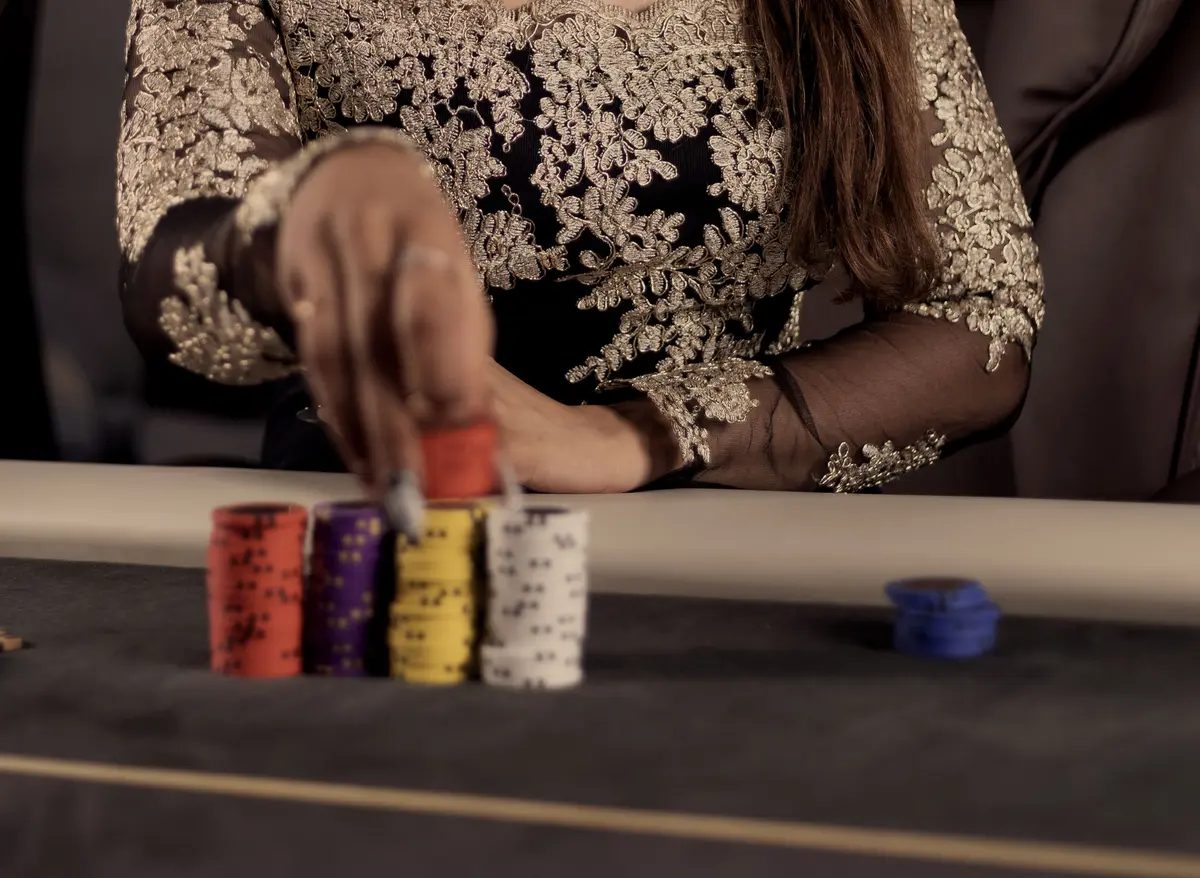
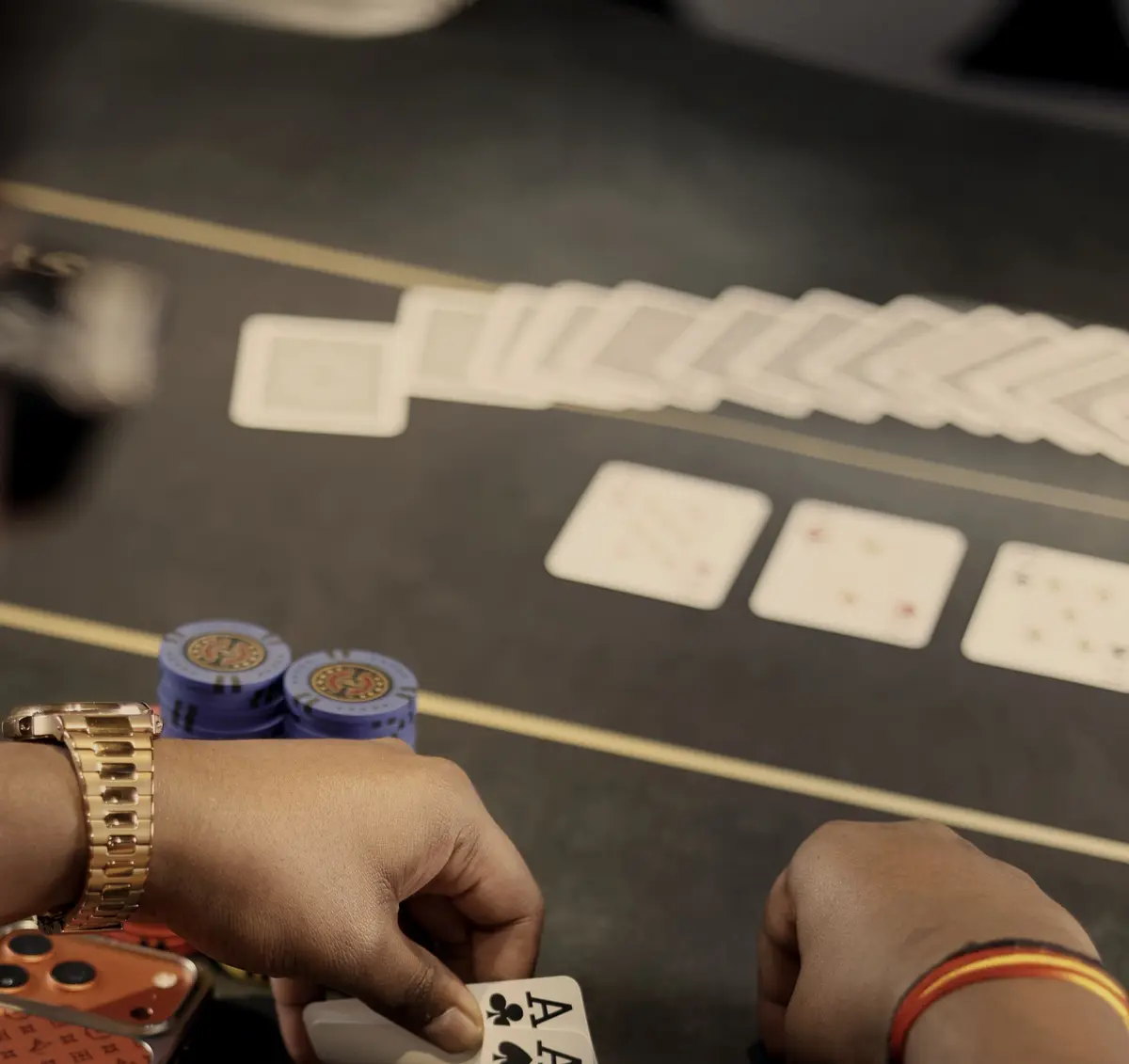
A player's hands resting beside three stacks of chips at the edge of the felt.

Now the only question left is what you want to play.