



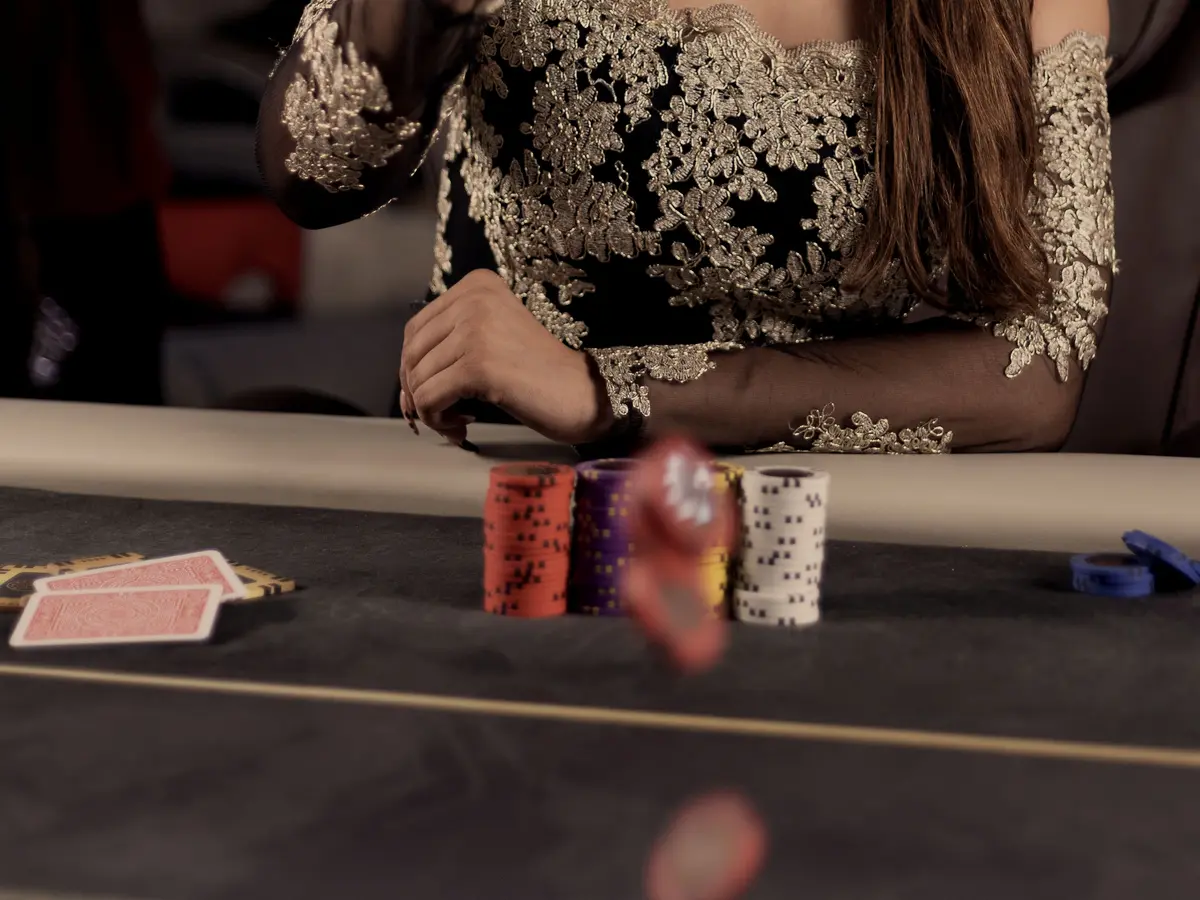
How Regular Poker Improves Decision Making, Patience, and Emotional Control

There’s a reason poker keeps turning up in unexpected places: business school case studies, trading floor interviews, negotiation seminars, and the bookshelves of people who make decisions for a living. Strip away the chips and the felt and poker is a machine for practising a rare skill set: making good decisions, quickly, with incomplete information, under emotional pressure, against other people trying to mislead you.
Most pursuits train pieces of that. Chess offers deep calculation with perfect information; sport offers pressure without probabilistic reasoning; academic study offers analysis without an adversary. Poker trains the whole stack at once, and it does something subtler too: it gives you honest feedback about your own discipline, patience, and ego, every single session. This article looks at what regular poker actually builds in a person, and why so many capable professionals treat their weekly game as more than recreation.
Decision Making with Incomplete Information
Nearly every consequential decision in life is made with partial information: hiring someone from three interviews, entering a market from imperfect data, trusting a partner from limited history. Yet almost nothing in ordinary life deliberately trains that muscle. School rewards problems with answer keys; most jobs punish visible mistakes so effectively that people learn to avoid decisions rather than improve them.
Poker is the counter-education. Every hand demands choices, dozens per hour, each made knowing you cannot see the whole picture. You estimate what your opponent holds from fragments: their position, their sizing, their history, their timing. Then you commit real resources to your estimate and watch the truth get revealed within minutes.
That last part is the secret ingredient: fast, repeated feedback loops. A manager might make a genuinely testable judgement call a few times a month. A poker player makes fifty an evening and sees the outcomes immediately. Over months, this compresses years of decision-making experience into a form you can actually learn from, provided you review your reasoning honestly rather than just the results.
Thinking in Probabilities Instead of Certainties
Untrained intuition thinks in binaries: this will work, that will fail, he’s bluffing, she’s not. Poker methodically dismantles that habit, because at the table, binary thinking loses money in ways you can count.
The player who lasts learns to think in distributions: my opponent’s range is roughly this set of hands; my flush draw arrives 35 percent of the time; this call needs to succeed one time in three to profit. And crucially, they learn the emotional counterpart: that a 70 percent favourite losing is not a scandal but a Tuesday, three times out of ten.
This mental furniture transfers with unusual fidelity. Probabilistic thinkers plan for downside scenarios instead of being blindsided by them, size their commitments to their confidence, and stop treating every setback as evidence that the plan was wrong. Investors, doctors, and product leaders all describe the same shift; poker just happens to be the cheapest, fastest place to acquire it. If you’re new to the game and want the foundations first, our beginner poker guide is the place to start.
Patience: Learning to Wait Without Wasting
Live poker deals you a playable hand perhaps once or twice an orbit. The rest of the time, the correct action is to fold and wait, sometimes for an hour, while others play. There are few modern experiences less compatible with a phone-trained attention span, and that’s exactly the value.
What poker teaches isn’t passive waiting; it’s productive waiting: staying engaged while inactive, gathering information from hands you’re not in, keeping standards intact when boredom argues for lowering them. The moment of failure it inoculates against is universal: the mediocre opportunity seized because nothing better had appeared recently. Every experienced player knows the feeling of talking themselves into a bad hand out of restlessness, and every disciplined player knows the specific satisfaction of declining it.
That capacity, holding position until conditions are actually right, has an obvious translation to careers, investing, and negotiation, where the expensive mistakes are so often impatience wearing the costume of decisiveness.
Emotional Control Under Real Pressure
Reading about composure changes little; being tested does. Poker administers the test on schedule. You will play a hand perfectly and lose to a two-outer on the river. You will watch chips you earned across three careful hours leave in ninety seconds. And then, this is the training, you will have to make the very next decision well.
The skill that develops has a precise shape: not suppressing emotion but decoupling it from action. Frustration arises; the fold still happens. Euphoria arises; the discipline holds anyway. Sports psychologists call this decoupling the core of performing under pressure, and poker drills it more frequently than almost any activity available to an adult with a normal life. We map the full inner landscape, tilt, variance, and ego, in our article on the psychology of winning players.
Regulars notice the transfer within months: the difficult email no longer answered in anger, the negotiation setback absorbed without visible flinch, the bad week at work processed as variance rather than verdict. The table, it turns out, is a rehearsal room for composure everywhere else.
Risk, Reward, and Financial Discipline
Poker forces an unusually honest relationship with risk. Every session involves deciding, in advance and in real currency, what an evening’s uncertainty is worth: what stakes fit your funds, when winning justifies pressing on, when losing demands stopping. The concepts have names and numbers, expected value, pot odds, bankroll ratios, which replace the vague feelings most people bring to financial choices.
The practices that keep a poker player solvent read like a personal finance course in miniature: money segregated by purpose, limits set before emotion arrives, records kept honestly, ego excluded from sizing decisions. Players who internalise them often report the habits migrating outward, to budgeting, to investment sizing, to a general allergy against risking what they cannot afford to lose.
It’s worth saying that this benefit only exists inside responsible play. Poker teaches financial discipline when practised with limits and honest accounting, which is exactly the culture a serious club maintains; responsible gaming isn’t a poster on our wall at Poker Syndicate, it’s the condition under which all these benefits are real.
Reading People and Situational Awareness
A live poker table is a masterclass in applied attention. Eight strangers, each broadcasting constantly through betting choices, timing, posture, and talk, while you learn to distinguish signal from noise. Who is impatient tonight? Who is protecting a short stack? Who just started performing confidence, and what does that usually mean?
This is empathy with a scoreboard. Your reads get tested for real money, which trains a rigour that everyday people-watching never achieves. Over time, regulars develop a durable sensitivity: to when a counterparty’s demeanour and words diverge, to the meaning of a pause, to what people do rather than what they announce. Anyone whose work involves negotiation, sales, management, or leadership recognises the value immediately, and it’s a skill layer that only the live game provides; it’s simply absent from online play.
Accountability: The Mirror Poker Holds Up
Here’s the benefit almost nobody advertises: poker makes self-deception expensive. In most of life, you can misattribute your outcomes indefinitely: the promotion missed because of politics, the project failed because of circumstances. The stories are unfalsifiable, so they survive.
Poker keeps score in a currency stories can’t inflate. Over any meaningful sample, your results are your decisions, and the game will quietly bill you for every leak you refuse to acknowledge: the impatience, the ego calls, the tilt you claim you don’t have. Players who improve are the ones who accept the mirror, review their own play honestly, and fix what it shows them. That practice, owning outcomes without excuse or self-flagellation, may be the single most transferable discipline the game teaches.
Conclusion
Poker’s reputation focuses on what happens to your chips. Its real dividend is what happens to you: judgement sharpened by thousands of honest reps, patience built in a room that rewards it, composure rehearsed until it holds, and a community you’d never have assembled any other way. The game keeps score in money, but it pays out in character.
Those returns compound fastest in the right environment: real stakes, fair games, and people who take both the poker and each other seriously.
Come collect the dividend in person. Poker Syndicate is more than a place to play; it’s a community where the game builds skills that outlast every session. Experience premium live poker, and discover what a serious game can do for you away from the table.
Frequently asked questions
Regular poker develops decision-making under uncertainty, probabilistic thinking, patience, emotional regulation, financial discipline, and people-reading. The live game adds social observation and composure under real stakes, which is why many professionals treat it as practical training.
The game exercises working memory, pattern recognition, and probabilistic reasoning continuously, and its rapid feedback loops make it an unusually efficient environment for improving judgement. Like any benefit, it accrues with thoughtful, regular play rather than passive repetition.
Directly. Negotiation, hiring, investment sizing, and strategy all involve committing resources on incomplete information against other motivated parties, which is poker’s exact structure. Executives and traders who play seriously routinely credit the table for sharpening those instincts.
Few activities teach it better. Correct play means folding most hands and waiting, sometimes for long stretches, while staying observant and ready. That practised tolerance for productive waiting transfers to careers and investing, where impatience is usually the expensive error.
Poker repeatedly places you in high-stakes moments immediately after disappointment, requiring your next decision to be sound anyway. That decoupling of feeling from action, rehearsed session after session, is the core of composure in any field.
Played responsibly, within defined limits and a managed bankroll, poker is an intellectually rich, deeply social pursuit. The healthiest version is live play in a well-run environment with a culture of fair games and responsible gaming standards.
Consistency beats intensity. A weekly live session, played attentively and reviewed afterwards, produces noticeable gains in decision quality and composure within a few months for most players.