



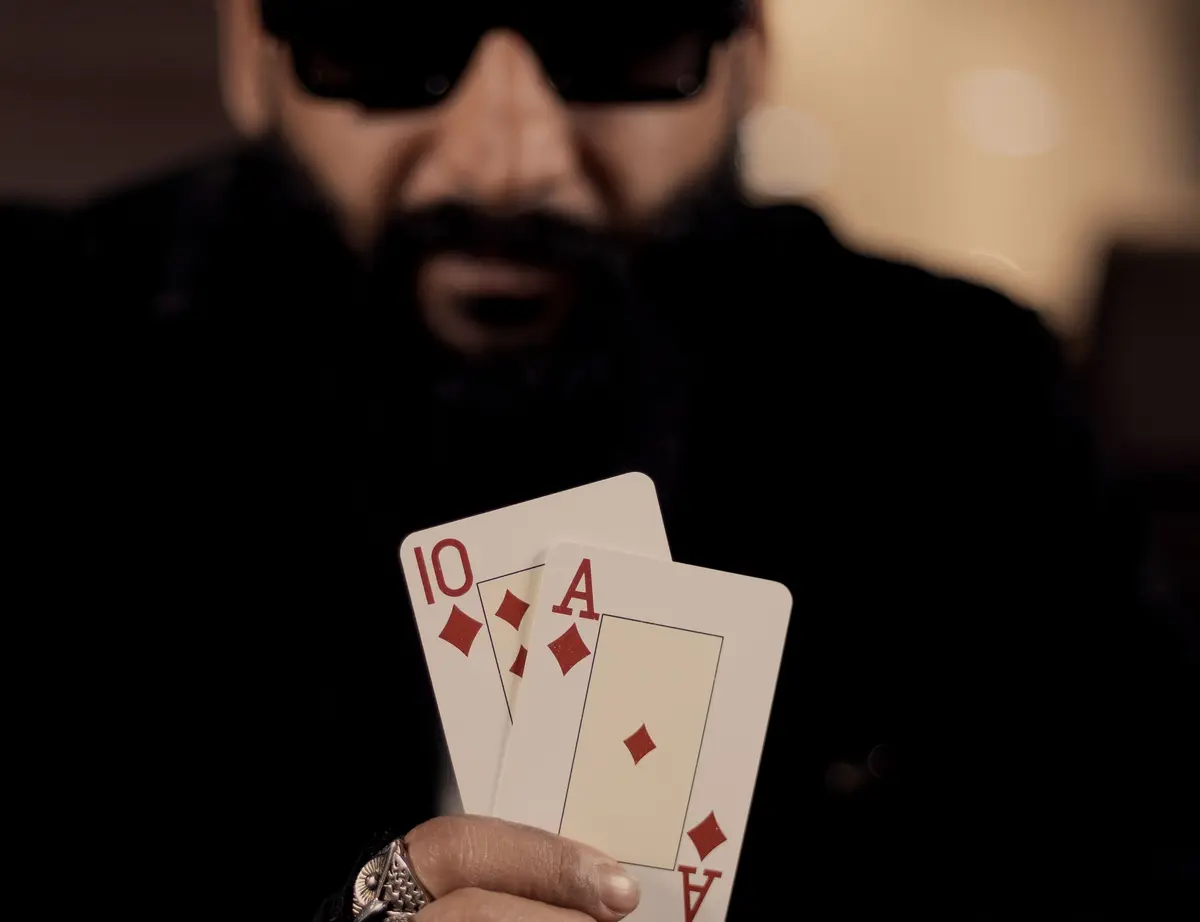




Poker Bankroll Management: The Skill Every Serious Player Must Learn
Poker has a graveyard, and it isn’t filled with bad players. It’s filled with good players who went broke: talented people who beat their games but bet their whole roll on the proposition that variance would be kind this month. Meanwhile, plenty of modestly skilled players have quietly compounded small edges for decades, because they mastered the one skill that keeps everything else alive.
Bankroll management is that skill. It isn’t glamorous, it doesn’t make highlight reels, and it’s the closest thing poker has to a survival guarantee. This guide covers what a bankroll actually is, the buy-in guidelines that professionals follow, when to move up and down in stakes, and the psychological discipline that makes the numbers work.
What a Poker Bankroll Actually Is
Your bankroll is money set aside exclusively for poker: separate from rent, savings, and daily life, and money you could lose entirely without material consequence. That last clause isn’t pessimism; it’s the definition. The moment poker money and life money mix, every decision at the table becomes contaminated by what the chips could otherwise buy.
A proper bankroll serves one function: it’s the shock absorber that lets you keep making correct decisions through the inevitable swings. Poker rewards correct play over the long run, but the long run arrives through wildly uneven short runs. The bankroll is what buys you enough time for skill to express itself.
Two implications follow. First, a bankroll is measured in buy-ins for your stake, not in currency; 2,000 is a fortress for a small game and a single bullet in a bigger one. Second, “serious about poker” and “has a defined bankroll” are the same statement. There are no exceptions among long-term winners.
Why Variance Makes Bankrolls Necessary
Variance is the gap between what your decisions deserve and what any given night pays, and its size surprises everyone at first. Consider a concrete example. You get your money in with A♠ A♥ against K♦ K♣, an 82 percent favourite, the best realistic scenario poker offers. You still lose nearly one time in five. Now imagine that as one hand among thousands: even a genuinely winning player, with a solid hourly edge, will experience losing weeks routinely and losing months occasionally, purely through the mathematics of chance.
The danger isn’t the downswing itself; it’s what an under-funded player does during one. With five buy-ins behind them, a normal losing stretch becomes an existential crisis. They tighten into unprofitable timidity, or chase losses at bigger stakes, or start doubting correct plays because the results have been ugly, mistakes we cover among the classic common poker mistakes. Well-funded players ride the identical downswing with boredom rather than panic. Same cards, same skill, different outcomes, and the difference was decided before anyone sat down.
How Many Buy-Ins Do You Need?
The honest range, drawn from decades of professional practice:
- Live cash games: 20 to 30 buy-ins for your regular stake. Playing a game with a 300 buy-in? Your roll should be 6,000 to 9,000. Recreational players who can reload from income can lean toward the lower bound; anyone relying on their roll should respect the upper one.
- Tournaments: 50 to 100 buy-ins. Tournament variance dwarfs cash-game variance, because payouts concentrate at final tables you’ll usually miss. Even excellent tournament players endure long streaks of near-misses.
- Beginners at the smallest stakes: Treat your first roll as tuition rather than capital. Two or three buy-ins for your first sessions is fine while you learn mechanics, but adopt the formal guidelines the moment poker becomes a regular pursuit.
Why so many? Because downswings of 10 buy-ins are unremarkable for winning cash players, and 20-buy-in stretches happen to good players often enough to plan for. The guidelines aren’t conservatism for its own sake; they’re sized to the actual distribution of results. A useful reframe: the roll isn’t there for when you play well. It’s there for when you play well and lose anyway.
Moving Up in Stakes (And the Harder Skill of Moving Down)
Bankroll rules earn their keep at the boundaries between stakes.
Moving Up
The clean trigger: your roll reaches the required buy-ins for the next stake, and your results at the current one demonstrate a genuine edge over a meaningful sample, not one hot weekend. When you take the shot, do it with structure: allocate a defined number of buy-ins (say five) for the attempt, and if they’re gone, return to your previous stake without drama. That’s not failure; that’s the system working.
Worth knowing in advance: the next stake up plays differently. Opponents are stronger, aggression is sharper, and your comfortable sizing habits will be tested. Give yourself sessions, not hands, before judging the experiment.
Moving Down
Here is the skill that actually separates disciplined players: voluntarily dropping stakes when the roll demands it. If losses take you below the guideline for your stake, the correct play is to move down, rebuild, and return. Almost everyone finds this excruciating; it feels like a demotion announced to the world. So players persist at stakes their roll no longer supports, which is precisely how competent players go broke.
Reframe it: moving down isn’t the punishment, going broke is. The player grinding smaller stakes on a rebuilt plan is doing something genuinely difficult and professional. Ego is the most expensive habit in poker, a theme our article on poker psychology explores in depth.
Session Rules: Stop-Losses and Game Selection
Bankroll management operates at the session level too, through rules you set while calm and follow while not.
Stop-losses. A common and sensible rule: end the session after losing two to three buy-ins. Not because the maths of the game has changed, but because yours has. After several buy-ins lost, most humans play worse: looser, angrier, more desperate to get even before leaving. A stop-loss converts an ordinary bad night into a contained data point instead of a crater. The companion rule matters equally: never top up “just once more” past your planned session maximum.
Buy-in discipline. Decide before arriving what you’re playing and for how much. Decisions made at the table, watching a lively game, are made by the wrong part of your brain.
Game selection. Your bankroll’s health depends not just on how much you risk but where. Choose games with structures and rake you understand, run by rooms you trust. A fair, professionally managed game means your variance is honest, the natural swing of cards, rather than inflated by sloppy rulings or worse. It’s a core reason serious players prefer established clubs; at Poker Syndicate, transparent structures and professional dealers are the standing conditions, so the only thing your bankroll ever fights is the deck.
Record Keeping: The Habit That Reveals Everything
Every session, record five things: date, game and stakes, hours played, result, and a note on how you played. Thirty seconds of honesty.
Records serve three functions. They tell you whether you’re actually winning, a question memory answers with flattery; players reliably remember wins vividly and losses vaguely. They reveal patterns worth money: perhaps you lose disproportionately in sessions past three hours, or in a particular game type. And they transform bankroll rules from vague intentions into arithmetic; “should I move up?” becomes a question your spreadsheet answers.
There’s a quiet psychological benefit too. The act of recording each session frames poker as a long game being managed rather than a nightly verdict on your worth. That framing alone improves play.
Bankroll Management as Responsible Gaming
It’s worth saying plainly: bankroll management is responsible gaming, expressed in a player’s vocabulary. Money that’s segregated from your life, limits set in advance, sessions that end at defined points, honest records: these are exactly the practices that keep poker a rewarding pursuit rather than a source of harm.
The inverse warning signs deserve equal daylight: playing with money that has another job to do, hiding results from yourself or others, chasing losses at escalating stakes, poker stress leaking into life. Any of these is a signal to step back, tighten the rules, and if needed, talk to someone.
A healthy poker culture reinforces the good practices. Clubs that value their players over the long term build these standards into the environment, and we hold that responsibility seriously at Poker Syndicate: the game is best, for everyone, when it stays a game that’s funded properly and played within limits. If you’re just starting out, our beginner poker guide sets these habits from day one.
Conclusion
Everything else in poker, the strategy, the reads, the beautiful hero folds, operates inside a container, and bankroll management is the container. Guard it with the guidelines: proper buy-in cushions, honest records, stop-losses set in advance, stakes chosen by arithmetic rather than ego. None of it is exciting, and all of it is what permits the exciting parts to continue.
Play within your means, in games worthy of your trust, and poker will give you decades of challenge instead of one expensive chapter.
Practise the discipline where the games deserve it. Poker Syndicate offers fair, professionally run cash games and tournaments across a range of stakes, so you can play exactly the level your bankroll supports. Join a community that respects the long game as much as you do.
Frequently asked questions
For casual first sessions at the smallest stakes, two or three buy-ins treated as tuition is fine. Once you play regularly, follow the formal guideline: 20 to 30 buy-ins for cash games at your stake, 50 to 100 for tournaments.
The amount you bring to the table for a cash game session (typically 100 big blinds), or the entry fee for a tournament. Bankroll guidelines are expressed in buy-ins because they scale with your stakes automatically.
Twenty to thirty for your regular stake. Recreational players with outside income can operate near twenty; anyone whose poker depends on their roll should hold closer to thirty.
When your bankroll meets the buy-in requirement for the next level and your records show a real win rate at your current stake over a meaningful sample. Take the shot with a fixed budget of buy-ins and step back down calmly if it’s spent.
A pre-set limit, commonly two to three buy-ins, at which you end the session regardless of how you feel. Its purpose is protecting you from the degraded play that follows heavy losses. Almost every player benefits from one; the ones who insist they don’t usually need it most.
Yes, and they do, whenever skill is combined with under-funding. A genuine edge only pays over thousands of hands; a bankroll too small to survive normal variance never lets the edge arrive.
Substantially. Tournament payouts concentrate in rare deep runs, so variance is far higher, and the guideline rises to 50 to 100 buy-ins. Long losing streaks are normal even for excellent tournament players.