








Texas Hold’em Rules Explained: Learn the Most Popular Poker Game
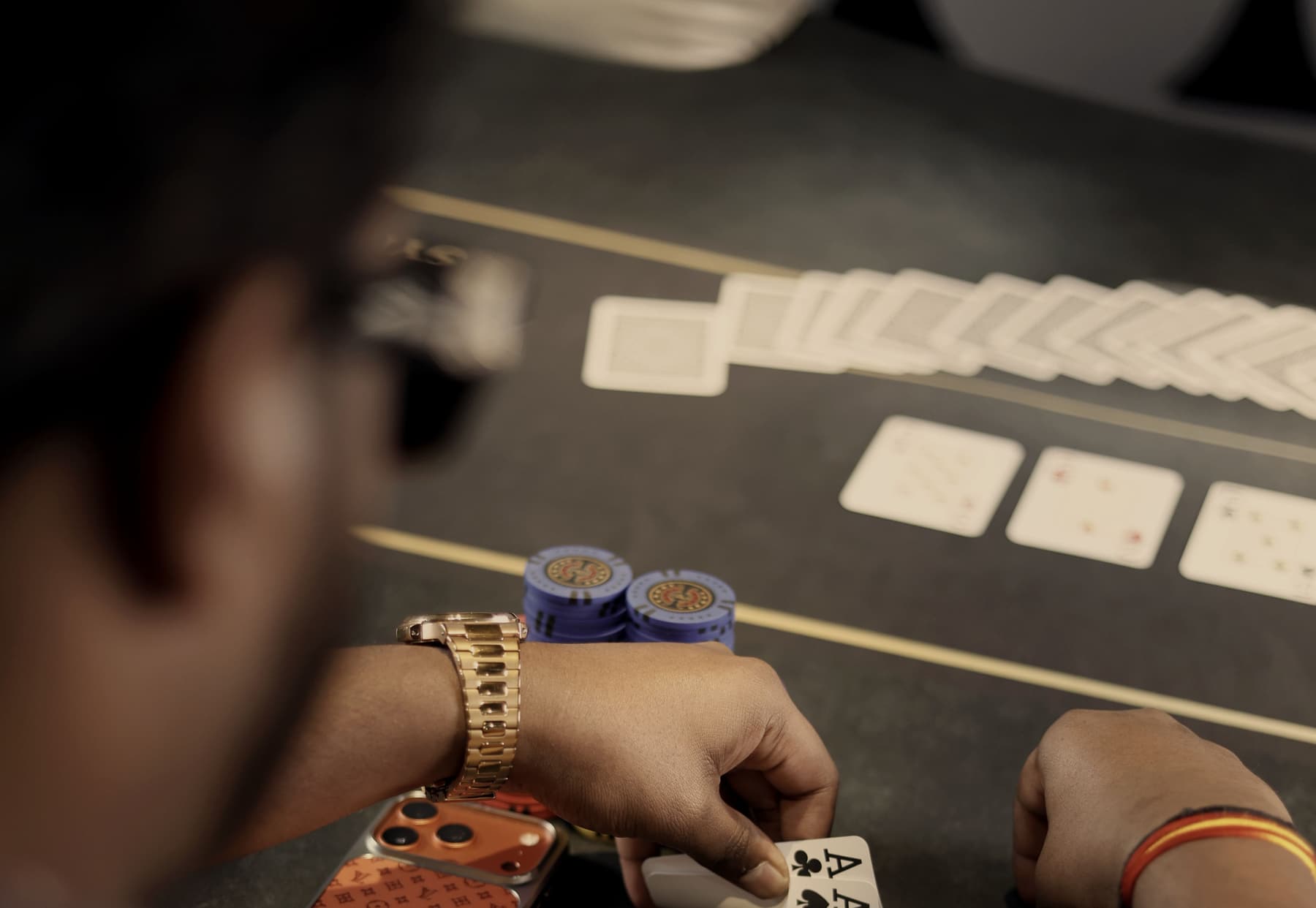
Texas Hold’em carries a famous description: it takes a minute to learn and a lifetime to master. The first half of that sentence is true in spirit but slightly generous in practice. The rules are simple, but they have edges and details, things like side pots, minimum raises, and showdown order, that new players only discover when a dealer politely corrects them mid-hand.
This guide covers the complete Texas Hold’em rules, from the first blind posted to the last pot pushed. Read it once and you’ll understand every mechanic you’ll encounter at a live table. Nothing here requires prior poker experience, though if you’re entirely new to the game, our complete beginner poker guide pairs well with this one, covering hand rankings and basic strategy in more depth.
The Goal of Texas Hold’em
Each player is dealt two private cards, known as hole cards. Five community cards are then dealt face up in the centre of the table across three stages. Your objective is to make the best possible five-card poker hand using any combination of your two hole cards and the five community cards.
You can use both hole cards, one, or none at all. If the board itself is the best five-card hand available to you, you “play the board” and the pot is usually split among remaining players.
There are two ways to win a pot. You can hold the best hand at showdown, or you can bet in a way that convinces every other player to fold before showdown. That second path is what makes poker a game of people rather than just cards.
The Deal and the Four Betting Rounds
Once the blinds are posted, the dealer gives each player two cards face down, starting with the small blind. Then the hand moves through four betting rounds.
Pre-Flop
Action starts with the player to the left of the big blind, a position known as “under the gun.” Each player in turn must fold, call the big blind, or raise. When the action reaches the blinds, they may also check (big blind, if unraised) or complete/call/raise. The betting round ends when every active player has put in the same amount.
The Flop
The dealer places three community cards face up. From this round onward, action starts with the first active player to the left of the button. Players may check (pass the action without betting) or bet. Once someone bets, the remaining players must call, raise, or fold.
The Turn
A fourth community card is dealt, followed by another betting round under the same rules. Pots are usually larger here, and decisions carry more weight.
The River
The fifth and final community card. One last betting round follows. If two or more players are still in when betting completes, the hand goes to showdown.
A worked example makes the flow concrete. You hold 10♠ 10♦ and raise pre-flop; two players call. The flop comes 10♥ 7♣ 2♦, giving you three of a kind, known as a “set.” You bet, one player calls. The turn is the K♠; you bet again and get called. The river is the 4♥, you make a final bet, your opponent calls with K♦ Q♦ (a pair of kings), and your set of tens wins the pot at showdown.
Your Betting Options Explained
At any point when the action is on you, your options are:
- Fold: surrender your cards and any claim to the pot. You lose whatever you’ve already put in.
- Check: pass the action to the next player without betting. Only possible when no one has bet in the current round.
- Bet: put chips in when no one else has. In no-limit, the minimum bet is one big blind.
- Call: match the current bet exactly.
- Raise: increase the current bet. Others must then call the new amount, re-raise, or fold.
One rule surprises new live players: verbal declarations are binding. If you say “raise,” you must raise. And to make a raise with chips alone, put the full amount in with one motion. Pushing out chips in instalments is called a string bet and won’t be allowed; dealers will count only the first motion. It’s a rule that protects the game from angle-shooting, and professional dealers at any well-run club enforce it consistently and politely.
No-Limit Rules: Raises, All-Ins, and Side Pots
“No-limit” means you may bet any amount up to all of your chips at any time. A few structural rules keep that fair:
Minimum Raise
A raise must be at least the size of the previous bet or raise. If the big blind is 10 and someone raises to 30 (a raise of 20), the next raise must be to at least 50. There’s no cap on the maximum; “all-in” is always available.
All-In and Table Stakes
You can never be bet out of a pot simply because an opponent has more chips. If someone bets 500 and you only have 200, you can call all-in for 200 and contest that portion of the pot. Poker is played with table stakes: only the chips in front of you at the start of a hand are in play, and you can’t reach into your pocket mid-hand.
Side Pots
When a player is all-in and others keep betting, the extra money goes into a side pot that only the still-active players can win. Say three players are in: Player A is all-in for 100, while B and C each have more and continue betting another 300 each. The main pot holds everyone’s first 100; the side pot holds the additional 600 between B and C. If A shows the best hand, A wins only the main pot, and the better hand between B and C takes the side pot. Dealers handle this arithmetic for you, which is one of many reasons a professionally dealt game is the right place to learn; at Poker Syndicate, our dealers manage multi-way all-ins cleanly so players can focus on decisions instead of accounting.
Showdown: Who Wins and Who Shows First
When the final betting round completes with two or more players remaining, hands are revealed.
- Who shows first? If there was a bet or raise on the river, the player who made the last aggressive action shows first. If the river checked through, the first active player to the left of the button shows first.
- Cards speak. Your hand is whatever your cards actually make, regardless of what you announce. If you misread your hand and say “one pair” while holding a flush, the dealer will award you the flush. This rule protects players from honest mistakes.
- Best five cards only. There is no sixth card and no tiebreak beyond the five-card hand. If two players hold A-K and the board pairs neither, they split the pot. Suits never break ties in Hold’em.
- Split pots. Identical five-card hands divide the pot equally, with any odd chip usually going to the player closest to the left of the button.
You may also muck (discard unshown) a losing hand at showdown without revealing it, though in most rooms any player at the table may ask to see a called hand. Etiquette varies; when in doubt, just ask the dealer.
Cash Games vs Tournaments
The rules above apply to both formats, but the structures differ in ways worth knowing before you choose a seat.
In a cash game, chips represent real money, blinds stay fixed, and you can join, leave, or top up your stack between hands whenever you like. It’s the more flexible format and the better one for learning, because every hand is played at a consistent depth.
In a tournament, everyone pays a fixed buy-in for a starting stack, blinds increase at set intervals, and play continues until one player holds all the chips. Prize money is distributed by finishing position. Rising blinds constantly reshape correct strategy, which adds a layer of complexity, and it’s also what makes tournaments so compelling. Well-structured club tournaments, with proper levels, professional dealers, and clearly published payout structures, are among the best experiences in live poker. It’s a standard we hold ourselves to for every event at Poker Syndicate.
Table Etiquette and Rules People Get Wrong
A handful of live-poker conventions aren’t strictly “rules of Hold’em” but will be enforced at any serious table:
- Act in turn. Folding or betting before the action reaches you gives away information and can affect other players’ decisions.
- Protect your cards. Place a chip on your hole cards. Unprotected hands that touch the muck can be declared dead.
- Keep big chips visible. Your largest denomination chips must be at the front of your stack so opponents can estimate what you’re playing.
- One player per hand. No advice, no showing your cards to a neighbour, no discussing the hand in progress.
- Don’t slow-roll. Deliberately delaying before revealing a winning hand at showdown is considered poor sportsmanship everywhere.
None of this is meant to intimidate. Dealers guide new players through all of it, and a room with a healthy culture makes the learning curve feel short. Ask questions freely; every strong player at the table once asked the same ones. And once you know the mechanics, the natural next step is learning what to actually do with them. Our guide to beginner-friendly poker strategy and our rundown of the common mistakes new Hold’em players make are the logical next reads.
Conclusion
Texas Hold’em’s rules are elegant: two cards for you, five for the table, four rounds of betting, best hand wins. The details covered here, from string bets to side pots to showdown order, are what turn “I basically know the rules” into genuine table confidence. Learn them once and they’re yours for life.
There’s a real difference between knowing the rules and having played them, though. The rhythm of live action, the discipline of acting in turn, the small ceremony of the button moving round the table: that only comes from sitting down and playing.
Ready to play your first real hands? Join us at Poker Syndicate, where professional dealers, fair games, and a welcoming community make it the ideal place to turn rules knowledge into real experience. Your seat is waiting.
Frequently asked questions
Between two and ten at a single table. Most live cash games run eight or nine-handed. Two-player poker is called heads-up and uses slightly different blind positioning: the button posts the small blind and acts first pre-flop.
No. You can use both, one, or neither. Your final hand is simply the best five cards available from the seven you can access.
They split the pot equally. Suits never break ties in Texas Hold’em; if the five-card hands are identical in rank, the pot is divided.
A raise must be at least the size of the largest previous bet or raise in that round. If the bet is 20, the minimum raise is to 40. The maximum is your entire stack.
You can bet any amount, but an opponent with fewer chips can call all-in for what they have and contest a main pot of that size. The excess is returned to you or contested in a side pot with other players.
The dealer button marks the last player to act after the flop. Because acting last is a significant informational advantage, the button is the most profitable position at the table, and it moves one seat clockwise each hand so the advantage is shared.
The rules take one session to absorb, especially at a table with a professional dealer who keeps the action clear. Playing well takes longer, but that’s the appeal: the game keeps rewarding study for as long as you care to improve.